Clara Powell · 7 November 2026
Local Wind Patterns and Community Bonds: Insights from Marilo's Annual Kite Festival
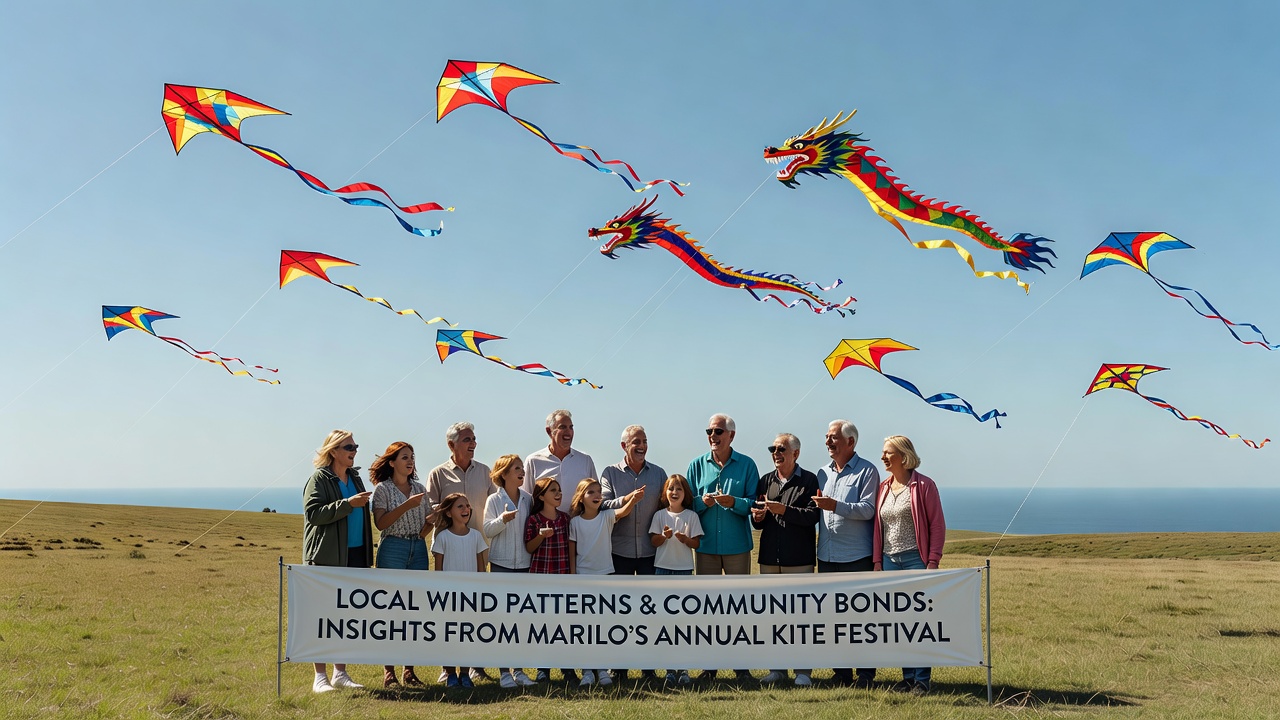
Marilo's annual kite festival has become a focal point for examining how local wind patterns interact with longstanding community traditions in this Italian coastal area. The event draws participants who launch kites designed to respond to specific wind behaviors recorded over decades in the region. Data from meteorological stations near Marilo indicate consistent seasonal shifts, with autumn winds often originating from the northwest and carrying steady velocities between 15 and 25 kilometers per hour during festival periods.
Regional Wind Characteristics and Festival Timing
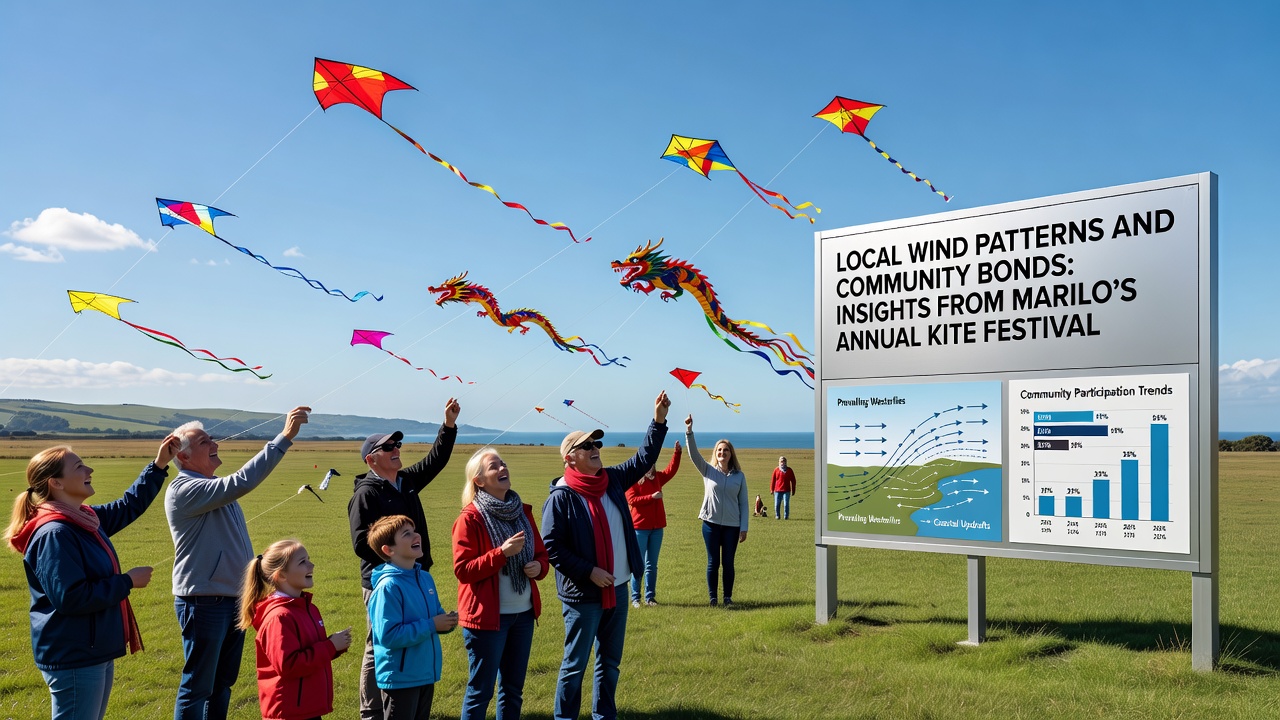
Observers note that Marilo sits in a zone where Mediterranean breezes meet inland topography, creating predictable updrafts that kite makers have adapted to for generations. Records maintained by the Italian National Research Council show these patterns remain stable enough to allow festival organizers to schedule activities around peak wind windows in early November. The 2026 edition, set for November 7 through 9, will incorporate real-time wind monitoring stations that feed data directly to kite teams on the ground, allowing adjustments based on gust variations recorded at 10-minute intervals.
Studies compiled by the European Centre for Medium-Range Weather Forecasts reveal that local wind corridors in this part of Italy exhibit lower turbulence compared to inland sites, a factor that reduces kite instability during public demonstrations. Festival records indicate that over 120 kite designs participate each year, with builders selecting materials and shapes calibrated to these documented wind speeds and directions.
Community Participation and Shared Practices
Residents coordinate months in advance to prepare communal kite-building workshops that emphasize collective skill-sharing across age groups. Local schools integrate wind pattern lessons into curricula so students can calculate lift requirements using historical data collected at the festival site. Participation numbers have risen steadily, with 2024 figures showing 850 registered flyers compared to 620 in 2019, according to municipal event logs.
Groups often divide responsibilities so that one team handles frame construction while another focuses on sail tensioning calibrated to prevailing northwest flows. These divisions reflect practical responses to the physical demands of the wind environment rather than arbitrary assignments. The festival site, located on open fields east of the town center, provides unobstructed access to the documented wind streams that make large-scale launches feasible.
Data Collection and Educational Components
Each year organizers install portable anemometers at multiple points across the flying grounds, generating datasets that researchers later compare against long-term regional models. These measurements help identify micro-variations in wind behavior that affect kite performance at different altitudes. University teams from nearby institutions have used festival data to validate computational models of coastal wind flow, publishing findings that extend beyond the event itself.
Workshops held during the festival teach participants how to interpret wind direction shifts using simple handheld tools, connecting everyday observation with broader meteorological principles. Attendance at these sessions reached 340 individuals in 2025, with repeat participants contributing their own logged observations from prior years. The cumulative record now spans 14 festivals and provides a continuous dataset for analyzing wind consistency in this specific locale.
Transmission of Local Knowledge
Elders pass along techniques for adjusting kite bridles based on subtle changes in wind texture that instruments alone do not capture. These methods rely on direct sensory feedback developed through repeated exposure to the same wind corridors. Festival organizers document the techniques in written guides that newer participants consult, creating a bridge between oral tradition and standardized practice.
Younger residents frequently pair with experienced flyers to learn how to read approaching wind shifts visible in the movement of distant vegetation. This pairing system ensures continuity of knowledge that aligns with the predictable seasonal patterns documented in station records. The resulting community network extends beyond the three-day event, with ongoing informal gatherings that maintain connections formed during kite construction sessions.
Conclusion
Marilo's kite festival continues to serve as a practical platform where documented wind patterns meet organized community activity. The November 2026 gathering will add another layer to existing datasets while reinforcing participation structures that have developed around those same environmental conditions. Records and participation trends indicate the event maintains its role in connecting measurable atmospheric behaviors with sustained local engagement.